
Every agent, one source of truth.
A shopping assistant on your storefront, Axon inside Core and the outside assistants that query you over MCP — all reading the same catalog, content and context, all logged like an employee, and none of them handing your customers’ data to anyone.
The shift
Five AI tools, and no idea what any of them know.
- 01
Every tool brings its own bot.
A chat widget, an email assistant, a copy tool — each with its own copy of your catalog, each slightly wrong.
- 02
Customer data leaks by default.
Paste a customer list into a chatbot and it lives somewhere else now, under somebody else’s retention policy.
- 03
Nobody manages the agents.
They act for you with no policy, no log and no budget — things you would never allow a new hire.
Privacy first
Customer data never leaves the app.
Agents inside Core can see a customer to help them. Anything connecting from outside sees your store, and nothing about the people who shop it. Zero data retention, by design.
Inside Core
- Axon, for your team
- The Design Assistant, for shoppers
Can read
- Customer records
- Orders and projects
- Catalog and bookings
- Your content and context
Your own agents see what your staff can, to do the same job.
Outside, over MCP
- Claude
- ChatGPT
- Any assistant you connect
Can read
- Catalog and bookings
- Prices and availability
- Your published content
Never
- Names, emails or phone numbers
- Orders or customer history
Outside assistants get the store, never the customers in it.
In the product
Three ways in, one brain.
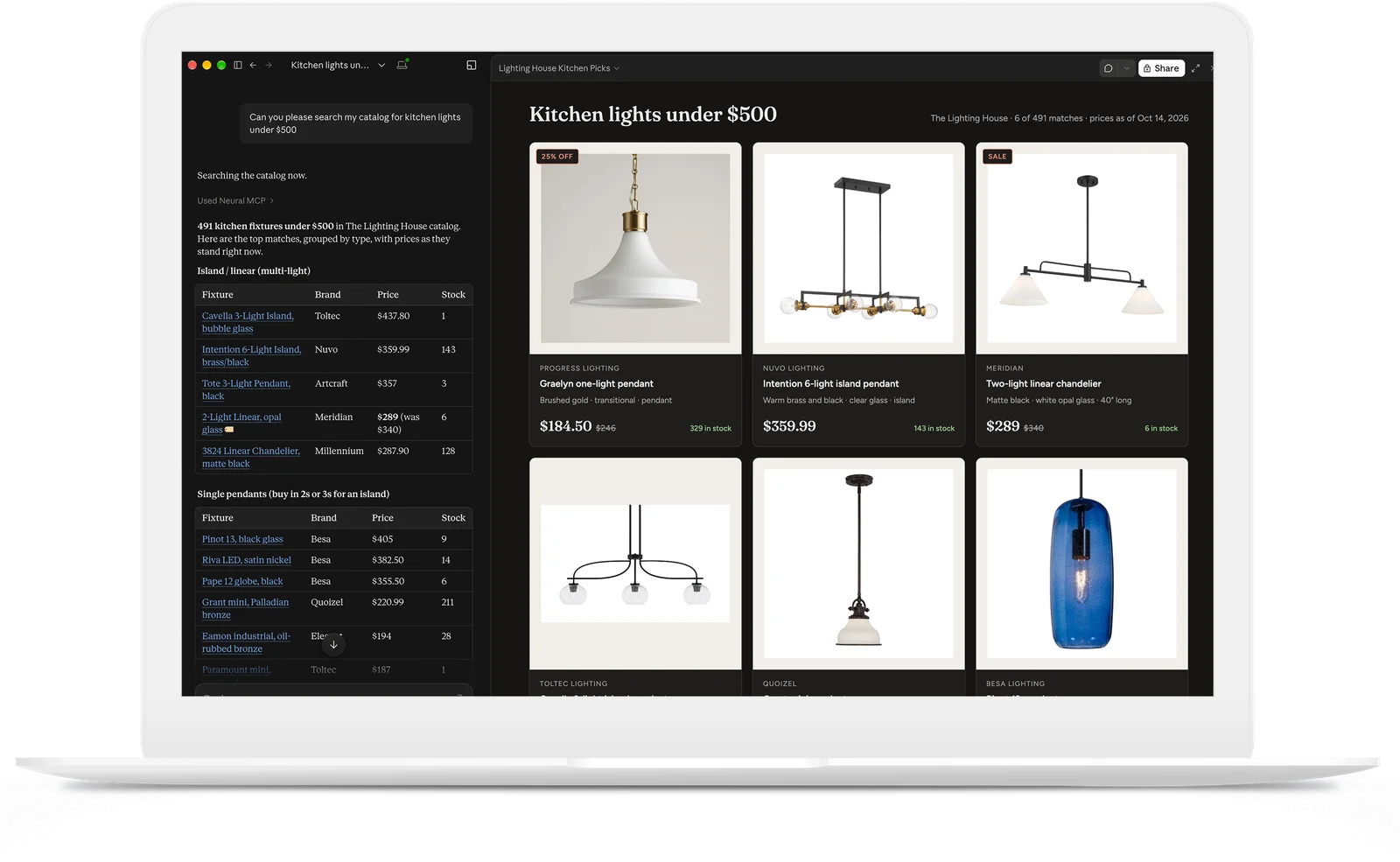
Your catalog, in the assistants you already use.
Connect Claude, ChatGPT or another assistant over MCP and ask your catalog in plain language — products, prices and stock as they stand, never a customer record.
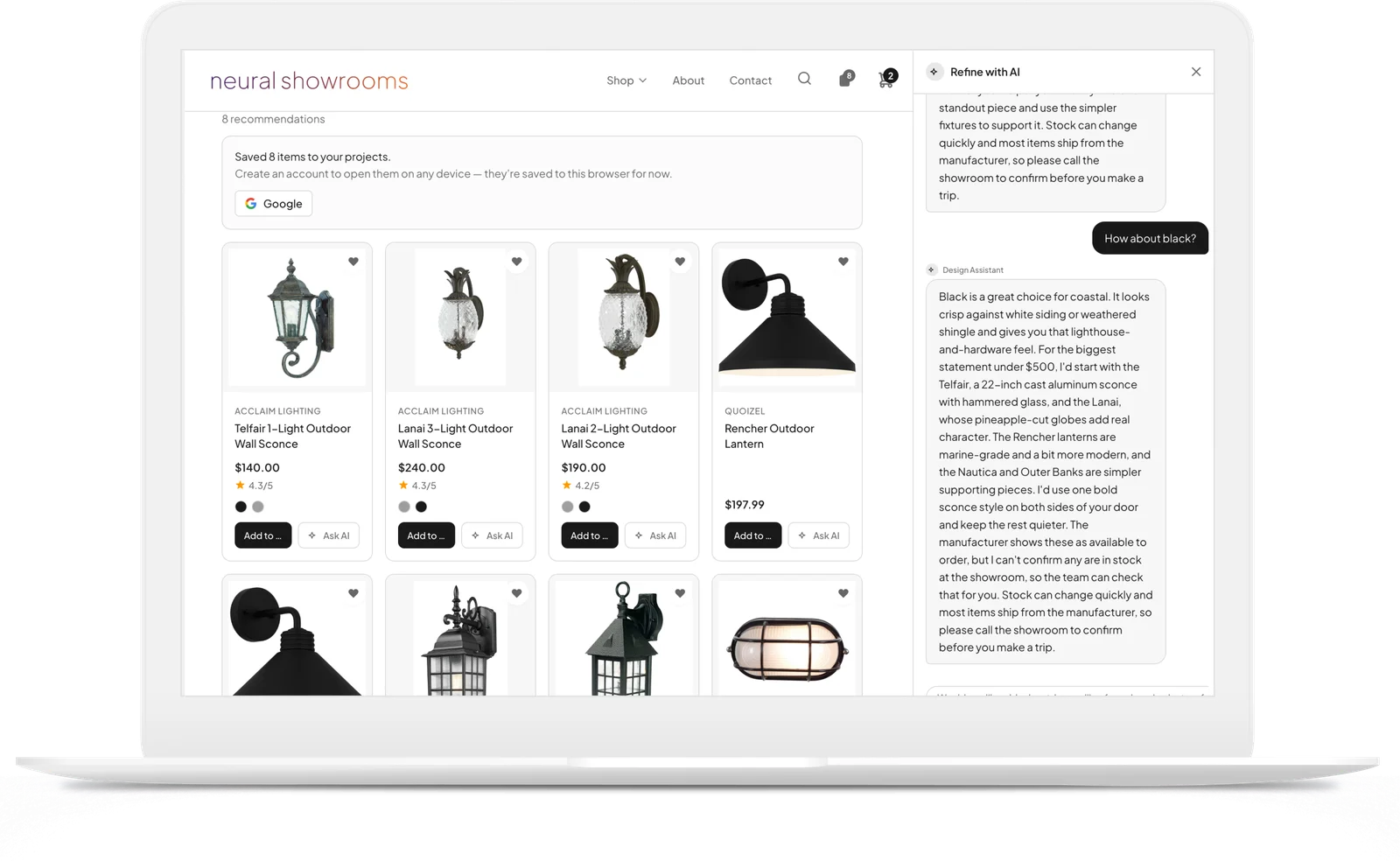
The Design Assistant, for shoppers
On your storefront, answering from your catalog and your manufacturers’ training, in your brand’s voice. All activities and products shown are tracked.
Shopping & Checkout →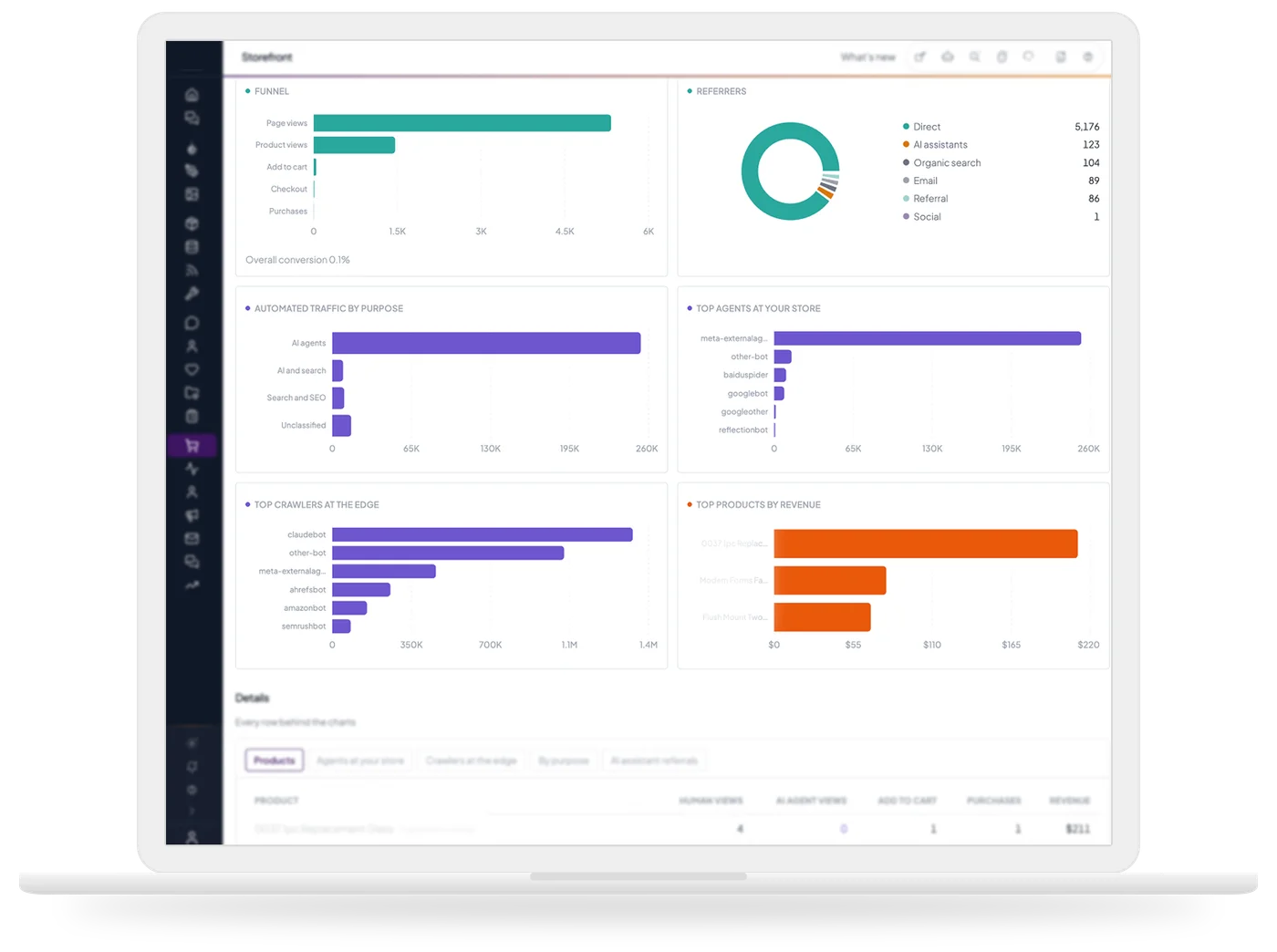
Axon, for your team
Inside Core: ask about the catalog or a campaign, draft copy, run the weekly briefing.
Automation →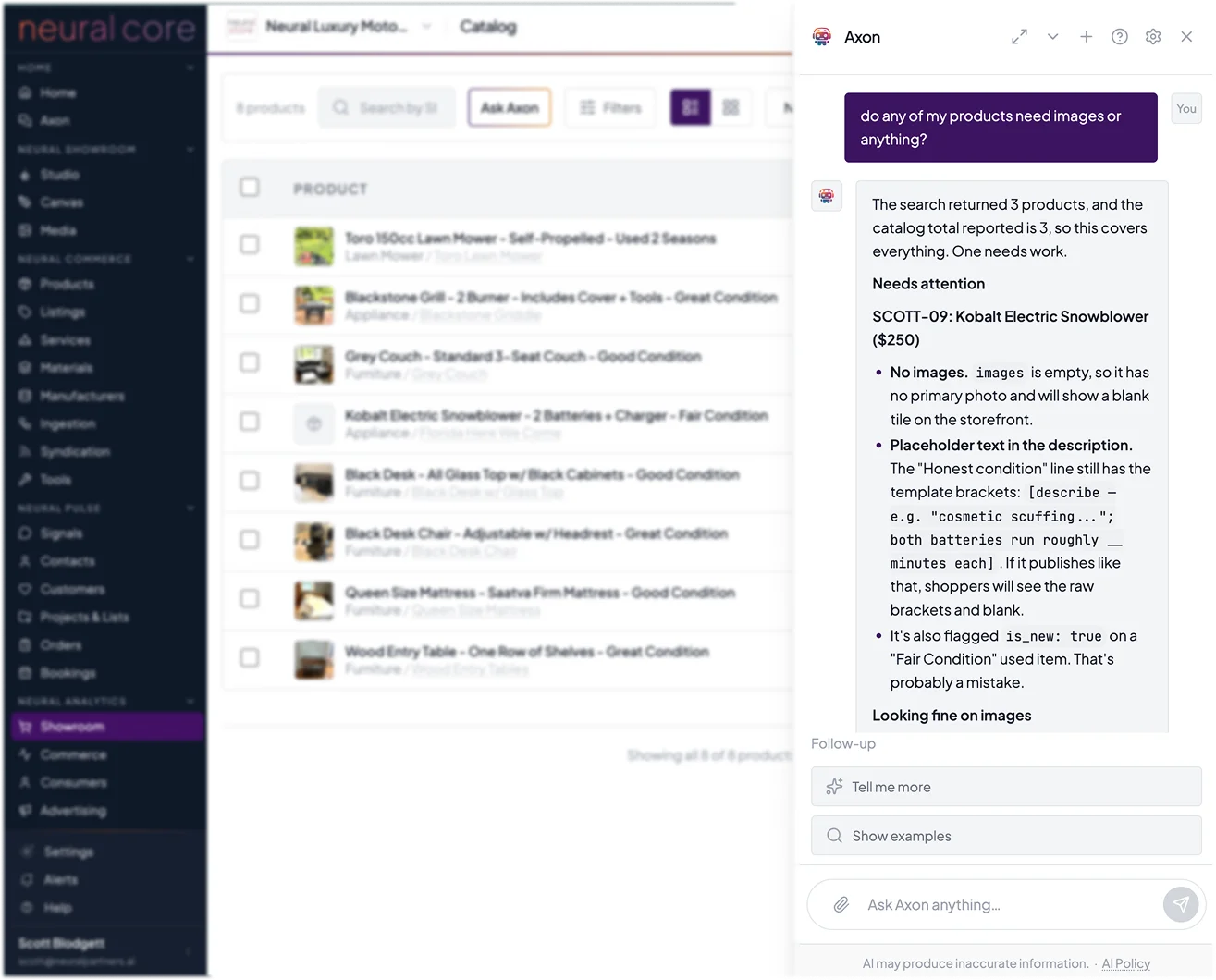
What's built in
What sits underneath.
PII stays in the app
Agents inside Core can see customer records to do their job. Anything connecting from outside over MCP sees the store, never the people in it. Zero data retention, by design.
One router, the right model
Each task goes to the model that fits it — Claude’s family directly or through AWS Bedrock, others through OpenRouter — so simple work stays cheap and hard work gets the best.
Partners →Agents managed like employees
Every agent works under the same policies, logging and audit as your staff, with its AI usage metered against a limit.
Automation →Agents that ask each other
When the Design Assistant needs something only the business knows, it asks Axon instead of guessing.
Your content, queryable
Brand guidelines, voice, how-tos and manufacturer training uploaded to Core become what every agent answers from.
Business Data & Context →Products, bookings and listings, unified
Products, services and materials enriched by AI into one structured catalog that every agent reads the same way.
Products & Bookings →Decision models for the fast calls
High-volume yes-or-no and ranking calls go to decision models — TypeSafe’s Jev — which are faster, cheaper and more predictable than a full language model.
Readable by outside agents
UCP and ACP profiles, WebMCP tools and semantic search, so the assistants your customers use can read your store.
Agentic Commerce →New protocols, folded in
Agent standards move monthly. We track them and fold in the ones that matter — what we are watching is in Resources.
Resources →
Questions
Asked before you ask.
Can outside AI assistants see my customers?
No. Assistants connecting over MCP see your catalog and content. Customer records stay inside Core, where only your own agents and staff can see them.
Which models do you use?
It depends on the task. Our router sends each job to the model that fits it — Claude’s family directly or through AWS Bedrock, and other models through OpenRouter where they are more efficient.
How do I know what an agent did?
Every action is logged and audited the way a staff member’s would be, and AI usage is metered by source against your plan.
Keep exploring
More in Neural Core.
- Customers & ContactsEvery customer and contact on one record in Neural Core — details, addresses, orders and what they saved, with contact details masked until your team needs them.
- Storefront OperationsRun the catalog behind your storefront from Neural Core — products and services, pricing models, cost and margin, categories and what is live.
- Accounts & ProjectsCustomer accounts and saved projects built into your storefront — Google sign-in, wishlists, addresses and order history on one record.
- Orders & RetentionOrder tracking and post-sale engagement on one customer record — status, check-ins, reorder reminders and win-back, triggered by lifecycle.
- Website EditorNeural Studio and Neural Canvas — edit the site, build pages and publish editorial without a developer: by hand or with the in-app agent.
- Business Data & ContextYour catalog, your media and the facts about your business, structured into one context in Neural Core — for your storefront, your team and the agents working for you.
- Signals & ConversionsWho reaches your store — people, AI agents and crawlers, told apart — and what turns into revenue, in Neural Core: funnel, referrers and revenue on one page.
- Agent OutcomesWhat your agents actually get done, measured in Neural Core — conversations, what they showed, how each one ended, and what shoppers did next.
- AutomationThe operations work behind a store, automated in Neural Core — supplier data in, feeds and marketing events out, tax and shipping at checkout, agents on a schedule, every change logged and every AI call metered.
- Insights & AnalyticsAdvertising, email and storefront performance in one place inside Neural Core — what each platform reported, next to what you actually measured.
- Neural CoreNeural Core is the intention marketing platform for showrooms and home-services businesses: customers, catalog, projects, orders, marketing and reporting on one shared record — with agents working alongside your team.
- Pricing