
Decided on the floor.
Researched long before it.
Nobody buys a sofa from a photo. They sit in it, feel the fabric and picture it at home. Before any of that, they spend weeks narrowing options, more and more of it by asking an assistant. We make every configuration you carry something that research can find.
// A buyer asks an assistant
“A sectional under $4,000 in a performance fabric, delivered within two weeks.”
What it needs to read
- Configuration
- 3-seat · left-facing chaise
- Fabric
- Performance weave · grade C
- Price as configured
- $3,780
- Lead time
- In stock · 9 days
- Where
- Floor model at your showroom
The problem
Hundreds of ways to build one sectional. Dozens of catalogs describing them.
Fabric, frame, finish, arm style, chaise side, cushion fill, dimensions — multiplied across every manufacturer you carry, each with its own catalog format and price sheet. Most of that lives in spreadsheets and PDFs, so the website shows the bestsellers and an assistant sees even less. Selling the rest takes a configurator, and a configurator is only as good as the data under it.
- Fabric & grade
- Frame finish
- Arm style
- Chaise side
- Cushion fill
- Dimensions
- Lead time
- Floor location
The selection isn't the problem. The data under it is.
The shift
What changes when the catalog is structured.
- 01
A configurator built on real data
Manufacturer catalogs pulled into one model, where each valid combination of fabric, finish and size has its own price and lead time. The configurator only offers what can be built, and every assistant reads the same rules.
- 02
Lead times you can stand behind
Floor stock, warehouse and manufacturer availability kept in sync, so "delivered in two weeks" means the same thing online as it does on the floor.
- 03
Every location, one inventory
For groups with more than one showroom, customers can see which floor has the piece before they get in the car.
- 04
More time for the consultative sale
When the lookups take care of themselves, the visit goes to what a catalog can't do: how someone lives, and which pieces work together.
One campaign · managed in Neural Canvas
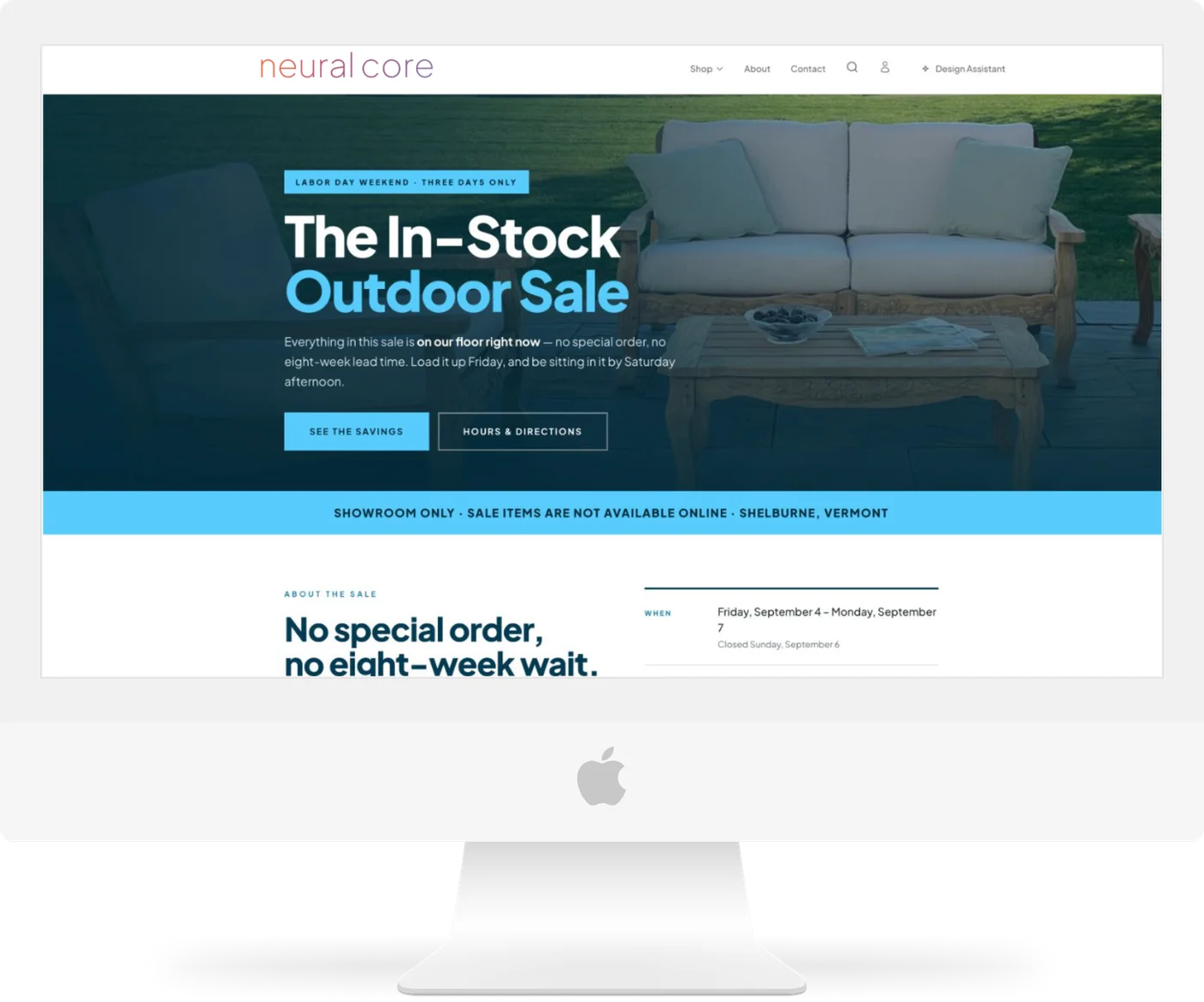
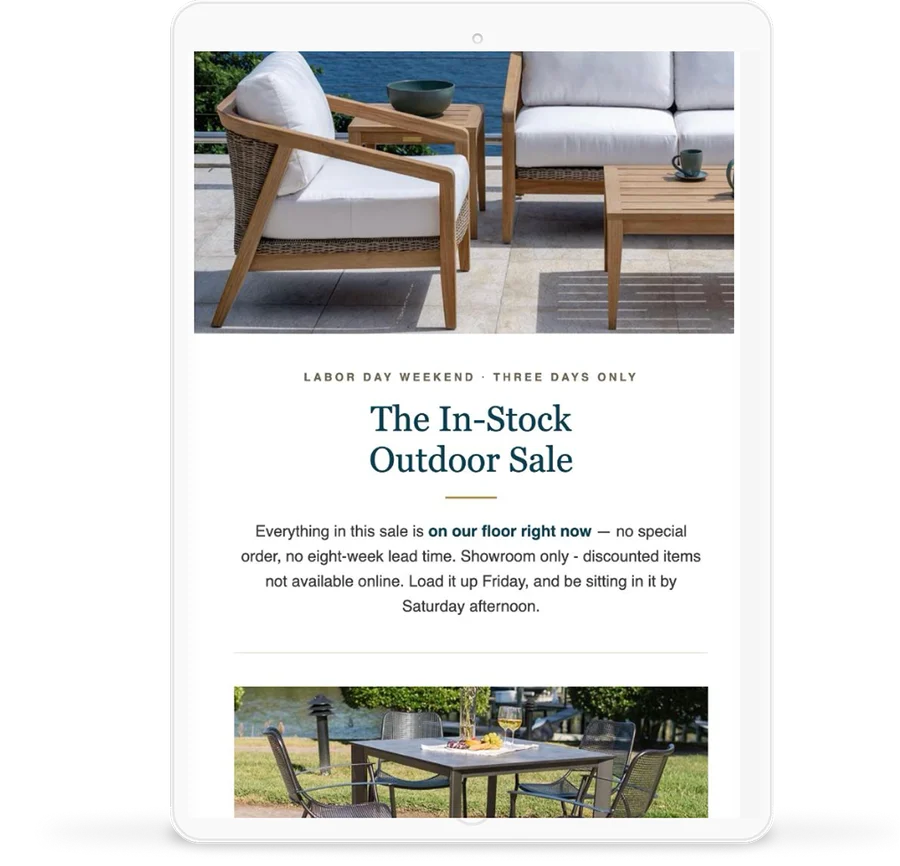
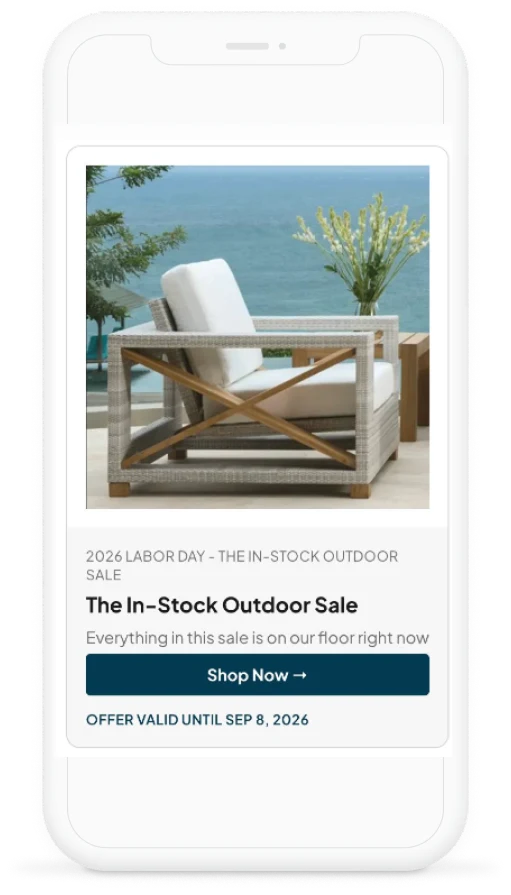
What we build
Four pieces, one data layer.
A showroom-first website
Built to earn the visit, not replace it: room inspiration, configurations you can browse, honest delivery estimates, and structured product data underneath.
Website Experiences →Catalog and inventory sync
Manufacturer feeds, floor models and warehouse stock in one place, across every location, refreshed as they change.
Products & Bookings →Campaigns that fill the floor
Search, social and programmatic aimed at showroom visits in your trade area, measured on visits and sales rather than clicks.
Paid Advertising →Follow-up that fits the cycle
The sofa buyer needs dining chairs next year. Email and SMS shaped by what each customer bought and browsed.
Email & SMS Marketing →
All of it runs on Neural Core, the structured data layer underneath.
Who we build this for.
- Home furnishings showrooms
- Living, dining and bedroom, with long decisions and more than one person deciding.
- Appliance showrooms
- Products people need to see working, with specs that have to compare cleanly side by side.
- Outdoor living
- Seasonal demand, material and durability specs, and stock that has to reflect this season.
- Design-led boutiques
- Curated lines, trade relationships with designers and stagers, and pricing the brand has to justify.
- Multi-location groups
- Shared data across every floor, with each location still running its own way.
Questions
Asked before you ask.
Why does a furniture showroom need structured product data?
Because the research happens before the visit. When someone asks an assistant for a sectional with a particular fabric, budget and delivery window, the answer is built from data it can read. If your configurations live in PDFs, it can only work with what it finds elsewhere.
Do we have to replace the platform we run on?
No. Most platforms do their job. Neural Core sits alongside what you already run, reads from it, and publishes structured data on top of it. If a new website makes sense we will say so, but it is not where we start.
Which manufacturers can you work with?
Any that publish a catalog in some form: a feed, a portal export, a spreadsheet or a PDF. Tell us the lines you carry and we will tell you what bringing in each one looks like.
Can buyers configure pieces online?
Yes, once the options are structured: which fabrics fit which frame, what each grade adds, how a choice changes the lead time. Neural Core keeps those rules in one place, so the configurator on your site, the assistant on your storefront and the outside assistants that query you all give the same answer.
Do you work with designers and trade programs?
Yes. Trade pages, trade pricing and campaigns aimed at interior designers and stagers are part of the build when trade matters to your business.
How do you measure it?
From the first touch to the visit to the sale: appointments booked, calls, direction requests, and which campaigns brought them in. Traffic is a means, not the number we report.
Other showroom floors.
// All showroomsLighting
The consultative sale, the contractor relationships, the data complexity of carrying 200 brands. The vertical we have actually measured — every figure above is this cohort.
Cannabis
A trusted guide, not a vending machine — strain quality, terpene profiles and knowledgeable staff, with the compliance complexity navigated, not avoided.
Marina & Auto
Whether it’s a test drive or a sea trial, buyers need to experience it firsthand. The shortlist is written before anyone steps onto the lot.